If you are a parent trying to understand how to support your child emotionally, play therapy can feel both interesting and a little unclear at first. It is common to wonder what actually happens in a session, and how something that looks like “just playing” can support big emotions, behaviour, or communication difficulties.
What is play therapy?
Play therapy is a therapeutic approach designed specifically for children who may find it difficult to express thoughts, feelings, and experiences through words alone.
Children naturally communicate through play. It is their most instinctive language. Through play, children make sense of their world, process experiences, and express emotions that may feel too overwhelming, complex, or confusing to say out loud.
In play therapy, the therapist uses this natural language of play to support the child in exploring emotions, relationships, experiences, and internal struggles within a safe, consistent, and containing environment.
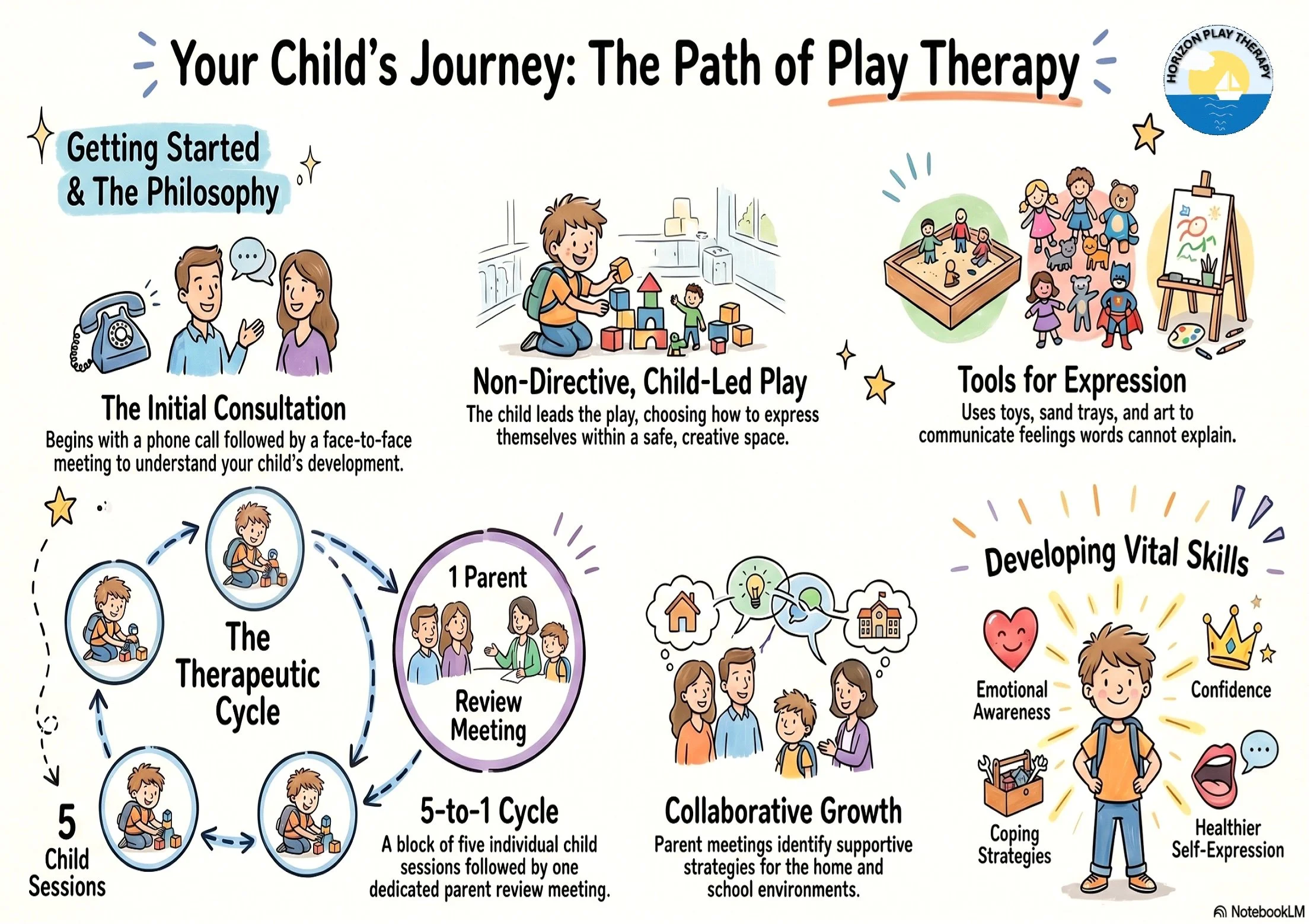
The child leads the process through play. The therapist does not direct the child, but instead carefully observes, supports emotional expression, and helps the child gradually build understanding of what is happening internally.
Why play instead of talking?
Adults often process emotions through conversation and reflection. Children are still developing the language, emotional awareness, and cognitive ability to do this in the same way.
Play becomes a bridge between a child’s inner emotional world and the external world around them. It allows expression without pressure, expectation, or fear of “getting it wrong”.
Through play, children can:
• Show feelings they do not yet have words for
• Recreate experiences that feel confusing, stressful, or overwhelming
• Experiment with different outcomes, roles, and solutions
• Communicate needs indirectly and safely
• Experience control, autonomy, and emotional safety
This approach is particularly supportive for children experiencing anxiety, trauma, loss, attachment difficulties, neurodivergence, or behavioural challenges. For many children, play offers a level of emotional accessibility that talking simply cannot reach on its own.
What actually happens in a play therapy session?
A play therapy session is structured in a way that feels safe and predictable for the child, even though the play itself is child-led and free-flowing.
The room is carefully prepared with therapeutic resources such as figures, sand trays, art materials, puppets, and symbolic toys. These resources allow children to express a wide range of emotions and experiences in a non-threatening way.
During the session:
• The child chooses how to use the space and materials
• The therapist stays emotionally present, attentive, and responsive
• The child’s play is not judged, corrected, or interpreted in a direct or intrusive way
• Emotional themes are gently supported through attunement and reflection
• The child is given consistent time and space to explore at their own pace
Over time, patterns often emerge in the child’s play that reflect their emotional world, relationships, and internal experiences. The therapist uses this understanding to support emotional regulation, resilience, and healing.
How does play therapy help children emotionally
Play therapy supports emotional development in a way that is both gentle and deeply effective. It does not force change. Instead, it creates the conditions where change becomes possible.
Some of the key benefits include:
Emotional regulation
Children begin to understand their feelings more clearly and develop healthier ways of managing emotional intensity.
Increased communication
Children often become more able to express needs, feelings, and experiences both in and outside of therapy.
Processing difficult experiences
Through symbolic play, children can work through events that may feel too overwhelming to talk about directly.
Improved behaviour
As emotional pressure reduces, behaviours that were previously expressions of distress often begin to shift.
Strengthened self-esteem
Children develop a stronger sense of self, identity, and emotional confidence.
Safer relationships
Children often begin to feel safer in relationships and more able to trust adults and peers.
Who might benefit from play therapy?
Play therapy can support a wide range of emotional and developmental needs, including children who are:
• Experiencing anxiety or low mood
• Struggling with anger or emotional outbursts
• Affected by separation, divorce, or loss
• Adopted or in foster care
• Living with trauma or adverse experiences
• Neurodivergent, including autism or ADHD
• Experiencing difficulties with friendships or school
• Showing withdrawn, avoidant, or aggressive behaviour
It can also be helpful for children who do not have a clear diagnosis but are clearly struggling emotionally or behaviourally.
What parents can expect
Parents are an important part of the play therapy process. While sessions are confidential for the child, regular communication with the therapist helps ensure the child’s wider environment is supported.
Typically, you can expect:
• An initial parent consultation to understand concerns
• Regular review meetings to track progress
• Support and guidance around emotional and behavioural changes
• A collaborative approach focused on the child’s well-being
Change can sometimes feel gradual rather than immediate. Often, emotional shifts begin internally before they are seen in behaviour.
A final thought
Play therapy works because it meets children where they are, not where we expect them to be. It respects the way children naturally communicate and gives them a safe space to express what might otherwise stay hidden.
When a child feels emotionally safe enough to play freely, something important happens. Their inner world starts to organise, make sense, and settle. From there, growth becomes possible in a way that feels natural, not forced.
If you are considering support for your child, play therapy can offer a gentle but powerful pathway toward understanding, connection, and emotional resilience.